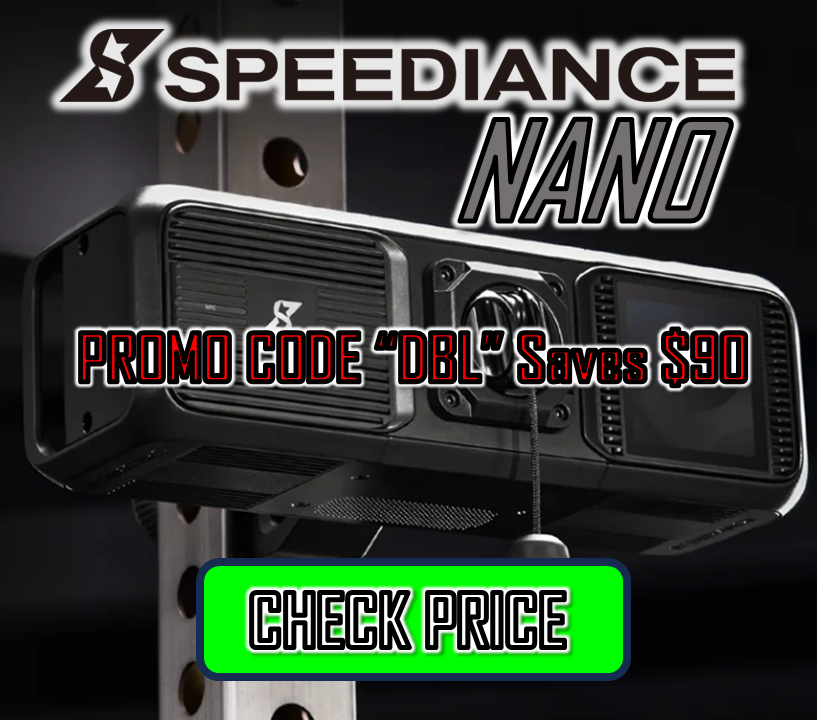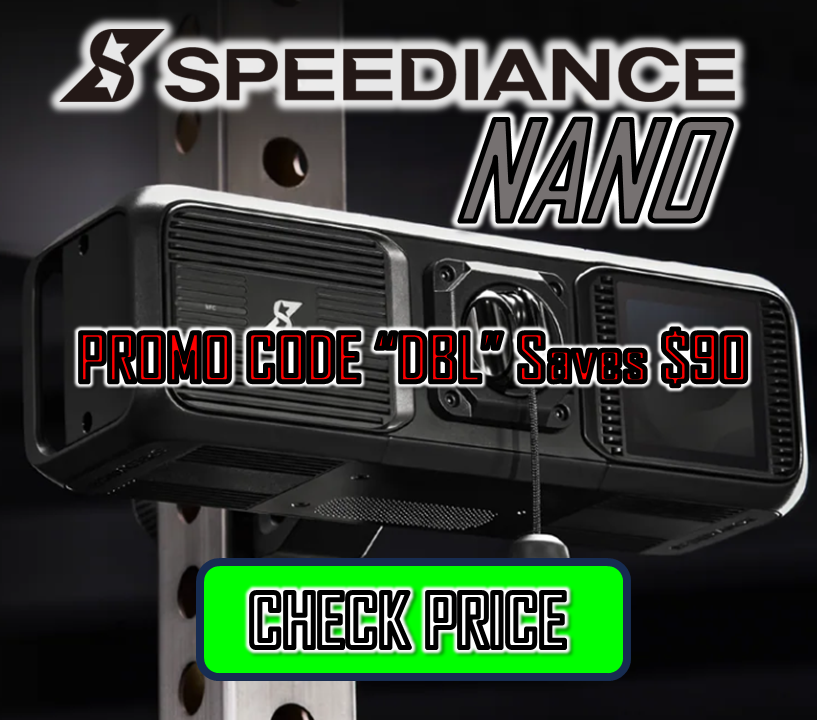
The Speediance Nano is a compact, 18-pound digital resistance unit designed to mount directly onto power racks and other gym machines. While traditional weight stacks have ruled home gyms for decades, digital resistance is rapidly evolving.
After six weeks of testing the Speediance Nano Station package alongside a traditional REP Fitness Ares 1.0 functional trainer, here is a complete breakdown of how digital resistance stacks up against analog cables, plus a tier-ranked review of the Nano’s hardware, mounts, accessories, and training modes.
Digital vs. Analog Resistance: Which Should You Buy?
Before diving into the Nano itself, it helps to weigh the pros and cons of digital cables against traditional weight stacks.
Why Choose Analog?
Longevity: Steel trolleys and iron weight stacks have no circuit boards or screens to fail.
Garage Gym Toughness: Analog cables don't care about freezing winters, humid summers, or dusty sheds without electricity.
Better Value for Dual Stacks: A single Nano starts around $1,600 (with promo code DBL), making it cheaper than a full functional trainer. However, buying two Nanos with sliding mounts to replicate a dual-stack trainer runs roughly $3,500—about $600 more than a REP Ares 2.0.
Why Choose the Speediance Nano?
Mount Anywhere: Unlike fixed front-post trolleys that get in the way of squats or chest-supported pads, the Nano can be mounted on any upright, crossmember, or extension arm. It fits 2x2, 2x3, and 3x3 racks with 5/8", 3/4", or 1" holes.
Zero-Tension Setup: Using the wearable Bluetooth ring, you can get into position for heavy chest-supported rows, pullovers, or belt squats before turning the weight on—eliminating awkward setups and dropped stacks.
Smart Training Data: The Nano tracks your reps, measures power output, and adjusts weight in 1 lb increments.
Assist Mode: Automatically drops the weight mid-rep when it senses you are stalling, acting as a built-in digital spotter so you can safely push to true muscular failure.
Cable Safe Mode: Allows you to set your exact starting cable slack. You can mount the Nano at the top of your rack for lat pulldowns and let out extra slack without remounting the unit.
Auto Rest Timer: Automatically logs rest periods between sets to keep your workouts on pace.
Specialty Resistance Modes: Eccentric, Chains, Inverse Chains, Fixed Speed, etc.
Speediance Nano Hardware & Performance
Smoothness & Feel: The Nano delivers up to 220 lbs of resistance (which can be doubled to 440 lbs using a pulley carabiner like the Rorman Strength pulley). It uses a braided cable that creates a very slight, neutral vibration when winding, but the resistance itself is remarkably smooth—engaging gently without jerking.
Interface & Software: The touchscreen UI is intuitive and responsive. One welcome software update would be a split-screen "Superset/Drop Set Mode" to toggle between two preset weights/modes with a single tap.
Battery Life: A full charge easily powers a heavy workout, and you can use the unit while plugged into the wall. Pro tip: Make sure to exit your workout and power the unit completely off when finished, as leaving it in an active workout screen prevents auto-sleep and will drain the battery overnight.
Mounts & Accessories Tier List
Mounts
Sliding Mount (S-Tier): Built with rollers, a pop-pin, and a locking knob for 3x3 racks. Despite a slight wobble due to the unit's 18 lb weight, it is well-built and lets you change cable heights in seconds.
Quick Release Mount (C-Tier): Included with the unit and compatible with almost any rack size. However, threading the long bolt takes too much time to be truly "quick," and the oversized knob makes it hard to mount in tight spaces near the floor or ceiling. (Note: Speediance has a hitch-pin mount and strap mount in development that should solve this.)
Accessories
Bluetooth Ring & Clip (S-Tier): The biggest differentiator in digital fitness. It comes with six ring sizes and a clip that attaches directly to your cable handles, letting you turn resistance on or off without letting go of the bar.
Bluetooth Handles (S-Tier): Sold separately, these feature built-in single- or double-click resistance buttons right on the grip.
Standard Handles (A-Tier): Smooth rotation and a high-end feel.
Ankle Cuffs & Carabiner (A-Tier): Comfortable padding with secure, easy-to-use latches.
Travel Case (B-Tier): Hard foam construction that protects the unit well, though true travel workouts will require Speediance to release their upcoming travel footplate.
Exercise Belt (B-Tier): A big upgrade over the Gym Monster 2 belt. It works well as a harness for sled drags, though dedicated hip belts (like the Henny Hip Belt) remain more comfortable for heavy belt squats.
Triceps Rope (A-Tier): Nicest Triceps rope that I have ever used. However, I wish the D-RIng for connecting to carabiners was larger (…but I am just nitpicking here).
Extender Belt (C-Tier): Useful if you own two units for chest presses, but rarely needed with a single Nano.
Resistance Modes & Smart Features Ranked
Eccentric Mode (S-Tier): Lets you overload the lowering phase of a lift. This is a standout feature for hypertrophy training.
Chains Mode (A-Tier): Gradually increases resistance as you reach the top of a movement, mimicking physical chains without the noise or clutter.
Inverse Chains Mode (A-Tier): Gradually decreases resistance as you reach the top of a movement. In other words, the Beginning of the movement is overloaded.
Sled Mode (A-Tier): Utilizes the Nano's 16.7 feet of cable travel to simulate heavy sled pulls in your driveway without scuffing concrete or loading weight plates on a steel sled.
Fixed Speed / Constant Mode (B-Tier): Keeps movement speed locked between 0.3 m/s and 1.0 m/s—ideal for physical therapy and rehab.
Rowing Mode (B/C-Tier): Feels smoother and more natural than the Gym Monster 2 due to the single centered attachment point, though dedicated air rowers still offer a better overall feel.
Isometric Test Mode (C-Tier): Measures static force output without joint movement—cool for tracking progress, though niche for daily lifting.
Ski Erg Mode (D-Tier): Lacks the authentic flywheel/air resistance feeling of a traditional SkiErg, though upcoming dedicated ski handles may improve the experience.
Final Verdict: Should You Buy the Speediance Nano?
The Speediance Nano is an exceptional piece of home gym tech that solves the biggest headaches of traditional cable machines: space, weight, and rack compatibility. While analog weight stacks still win on pure durability and lower cost for dual-stack setups, the Nano’s Bluetooth ring, Eccentric mode, and Assist mode offer training benefits iron simply can't match.
With upcoming accessories like a travel platform, strap mount, and hitch-pin mount on the way, the Nano is only going to become more versatile.
Ready to upgrade your home gym? Click here: https://bit.ly/DBL-NANO and Use promo code DBL at checkout to save $90 on your Speediance Nano order.